How to Properly Protect Winter Onions and Garlic in Winter: Agronomists' Advice
Ukrainian scientists shared recommendations on winter mulching for winter onions and garlic, explaining the best materials to protect crops from frost.
 💼Economy
Photo: TSN
Key points
- Winter onions require a thin mulch layer of 1-2 cm.
- Peat, humus, or compost are recommended for garlic.
- Agrotextile must be removed in spring after sprouting.
Planting winter crops in autumn is a standard practice for many gardeners, allowing plants to establish root systems before cold weather sets in. However, the lack of a stable snow cover in winter creates a risk of freezing, especially in open areas. Experts note that proper mulching helps retain soil moisture and stabilize temperatures.
Guidelines for Onions and Garlic
According to recommendations from research institutions of the NAAS of Ukraine, the approach to covering different crops varies. For winter onions, a thin organic mulch layer of 1-2 cm is sufficient to prevent crust formation in spring. Meanwhile, excessively thick coverage can harm plants during prolonged winter thaws due to excess moisture.
For winter garlic, experts recommend using peat, humus, or compost in a layer up to 3 cm thick after the soil has frozen. Recent agricultural studies also highlight the effectiveness of white agrotextile and buckwheat husk. However, using straw requires caution, as its decomposition can temporarily reduce nitrogen availability in the soil.
Spring Inspection of Beds
Once spring warmth arrives, it is crucial to check the condition of the garden beds. If agrotextile was used for protection, it should be removed as soon as sprouts emerge to avoid hindering leaf growth. Organic mulch like peat or compost can often remain on the soil surface as a natural fertilizer, provided it hasn't formed a dense, matted layer.
Source TSN — tsn.ua/other/koly-ta-chym-nakryvaty-tsybuliu-i-chasnyk-na-zymu-rekomend… ↗
Read next
 🩺Health
Secrets of Longevity: Spain's Oldest Resident Celebrates 113th Birthday
Spain's oldest citizen, Teresa Fernández Casado, has marked her 113th birthday, sharing insights into her long and active life.
 🩺Health
Ukrainian Special Operation Near Libya: Russian Corvette and Supply Vessel Destroyed
Ukrainian Defense Forces and the SBU conducted a successful operation near the Libyan port of Benghazi, sinking the Russian corvette «Merkuriy» and damaging the vessel «M…
 🚌Transport
Ukraine's Path to the EU: Why Euro-Integration Reforms Stall Due to Systemic Governance Flaws
The European Commission has published its report on Ukraine's EU accession progress, pointing to partially fulfilled recommendations and implementation gaps.
 🛡️Security
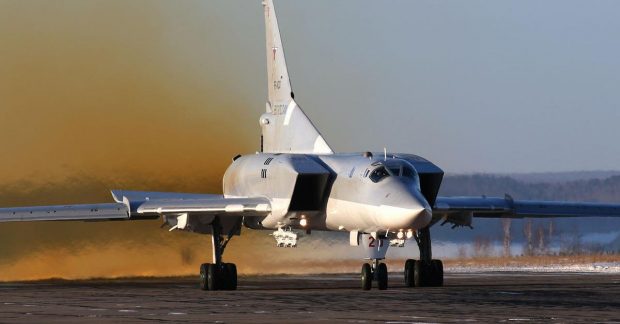
Technological Dead End: Expert Highlights Critical Flaws in Russian Aviation
Russia's military-industrial complex faces a deep crisis in producing and maintaining strategic aircraft due to lost Soviet technologies.
 🇺🇦Ukraine
Finnish MPs Propose Adopting Ukrainian Experience for Border Fortifications with Russia
Members of the Finnish parliament advocate for building tank barriers and protective structures along the eastern border during peacetime, drawing lessons from the war in…
 🛡️Security
Rescue operation in Dymer: death toll rises to nine
In Dymer, Kyiv region, rescuers are continuing to clear debris following a Russian strike, where a 79-year-old woman was saved, but the death toll has increased.